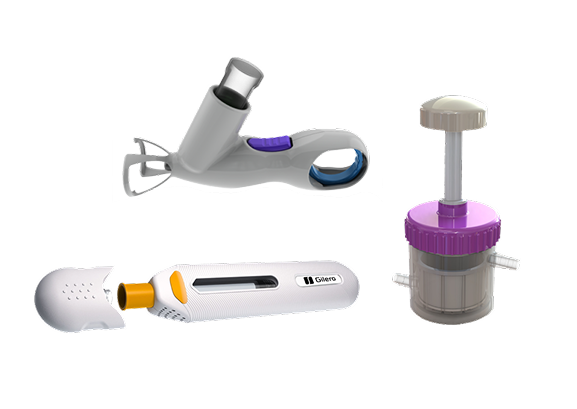


Autoinjectors provide a safe, consistent, and often life-saving treatment to users outside of clinical settings. However, as the range of drugs delivered subcutaneously grows in complexity, this has a profound implications for the devices designed to deliver them. High-viscosity biologics, in particular, pose mechanical and usability challenges that off-the-shelf devices are not always equipped to handle.
While platform devices from established providers are appropriate for simple formulations, they are not appropriate for every application. When the drug formulation presents unique requirements—such as higher viscosity or shear-dependent effects, or interactions with primary siliconisation — understanding the device, and making informed modifications to its function can significantly reduce risk in later development, improving the patient experience and reducing time to market. This is where holistic customisation comes into play: retaining the reliability of a platform while tailoring critical aspects to suit the needs of the drug and, more importantly, the patient.
Multiphysics simulation of the device and the injection can often provide insights into challenges within the drug-device interface. Combining this with other probabilistic methods allows rare but critical risks to be identified early and mitigated appropriately with robust solutions.
At the heart of successful drug delivery is more than just mechanical function it’s the user experience. Human factors play a crucial role in determining whether a treatment will be used correctly, consistently, and with confidence. With an ageing population, and the prevalence of co-morbidities, standard autoinjectors which paired with difficult to deliver formulations pose the risk of extended injection times, making them difficult or even impossible to use.
We are helping a client address these barriers by developing engineering solutions and user interfaces to support users with limited physical ability. These enhancements allows users with low dexterity or grip strength to operate devices reliably and independently, restoring autonomy and access to critical therapies.
By leveraging our engineering and design expertise, we are creating accessible, effective, and intuitive solutions, ones that not only adapt to the properties of the drug but also meets the real-world needs of the people who rely on it.