

Written by Tom Oakley, Board Member and VP Design and Development, Sanner Group
The global healthcare industry is entering a period of profound transformation. Geopolitical realignments, economic pressure, and regulatory change are reshaping how pharmaceutical and medical device companies design, develop, and manufacture and distribute products. For MedTech innovators and their partners, anticipating these shifts is no longer optional, it is a prerequisite for sustainable growth.
A Changing Global Landscape
Several powerful macro trends are converging at once. Ageing populations, the rise of chronic diseases, and the continued growth of biologics are driving long-term demand for innovative drug delivery and medical devices. At the same time, the boundary between consumer products and medical devices continues to blur, with usability and patient experience becoming critical differentiators.
Overlaying these trends is an accelerating shift toward outsourcing. Pharmaceutical and biotech companies are increasingly relying on external partners to provide integrated capabilities – from early-stage design and development through industrialization and commercial manufacturing. Speed, flexibility, and regulatory confidence are now decisive competitive advantages.
Diverging US and EU Perspectives
While global in scope, these changes are being interpreted very differently across regions, particularly between the United States and Europe.
The US is prioritizing domestic production through tariffs, government pressure, and large-scale investment programs aimed at reshoring critical manufacturing. At the same time, healthcare affordability has become a central political issue, with cost pressure increasing across Medicare, employer-based insurance, and public healthcare programs.
One of the most consequential developments is the stated US policy of Most Favored Nation (MFN) pricing. Under this policy, prices for certain single-source drugs in the US will be benchmarked against the lowest prices in other developed markets. In 2021 the US paid three to eight times the price for the same drugs compared to other advanced economies.[1] While still evolving, MFN pricing has the potential to significantly compress margins and alter global launch strategies – with ripple effects across suppliers and development partners.
In a separate but concurrent change, the US market is seeing a rise in Direct to Customer (DTC)[2] sales of medicines. These sales cut out the powerful Pharmacy Benefit Managers (PBMs) in the US. PBMs are third‑party companies hired by health insurers, employers, and government programs to manage prescription drug benefits. They were originally created to simplify prescription drug administration, but over time they have become major intermediaries influencing drug pricing, access, and pharmacy reimbursement. The most striking example of the rise in DTC sales is in weight management drugs: the global DTC weight-loss medication market size is valued at USD 8.64 billion in 2025 and is estimated to reach USD 35.61 billion by 2034.[3] Part of the trend is fueled by new and growing DTC schemes such as Lilly Direct and TrumpRx. The DTC trend has important implications for the medicine and drug delivery device supply chain. The value proposition and marketing will need to be aimed more than ever at the end user rather than intermediaries such as PBMs, advertising and social media will be used to promote products differently, packaging will need to adapt to be more compelling and similar to the consumer market, and supply chains may need to adapt to become more like “Amazon fulfillment centers” rather than traditional pharmacies.
Meanwhile, the European Union is trying to balance the competing requirements of maintaining access to the lucrative United States healthcare market, keeping the option open of retaliatory tariffs, assuring regulatory compliance for the health of its citizens (which tempers completely free trade), and protecting its own industries from low-cost competition, principally from India and China.
For medical device and drug delivery companies, the message is clear: pricing pressure is no longer limited to pharma alone. It increasingly influences budgets, timelines, and risk tolerance across the entire value chain.
What This Means for Medical Device Companies
In this environment, device companies, particularly those supporting drug delivery, combination products, and diagnostics, must rethink how they position themselves.
Supply chain resilience has become a strategic differentiator. Nearshoring, dual sourcing, and strong regional supply chains help mitigate geopolitical risk while improving continuity, agility, and environmental sustainability.
Customer diversification is equally critical. While large pharmaceutical companies remain essential partners, mid-sized biotech, diagnostics firms, and emerging digital health players often operate with faster innovation cycles and less direct exposure to pricing mechanisms such as MFN. Serving these segments requires rapid development grounded in fundamental science, technical depth, and the ability to scale quickly.
Regulatory expertise is now a value-creating capability, not just a compliance requirement. As regulatory complexity increases – especially for combination products and advanced drug delivery systems – partners that can guide clients from design through market authorization stand out. For example, the EU Medical Devices Regulation introduced substantial additional regulatory work for medical device manufacturers, and updates to the US 21CFR Part 4 (Combination Product cGMP requirements) indicate increased scrutinization ensuring that cGMP systems satisfy both drug (21CFR210/211) and device (QMSR 2026) requirements. End-to-end CDMO models reduce risk, shorten timelines, and simplify development for innovators.
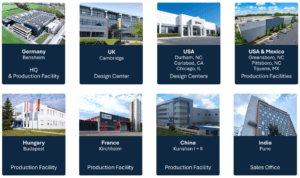
Sanner’s global manufacturing and design sites
Growth Through Partnership and Innovation
Against a backdrop of tighter budgets and heightened scrutiny, growth depends on smart investment and collaboration.
Strategic partnerships and targeted M&A allow companies to rapidly expand capabilities, access new technologies, and enter high-growth therapeutic areas such as neurostimulation, wearable injectables, and smart drug delivery systems. These platforms not only support clinical outcomes but also improve adherence, reduce waste, and align with sustainability goals – all increasingly important decision factors for pharma customers and investors.
At the same time, value-driven innovation is paramount. Modular designs, scalable platforms, and manufacturing-ready solutions help customers manage cost while maintaining performance and regulatory robustness.
Anticipation Is the Advantage
The winners in this new environment will not be those who simply react to geopolitical and economic change, but those who anticipate it. For medical device companies focused on design, development, and manufacturing, the opportunity lies in becoming strategic partners – not just suppliers.
By combining resilient operations, regulatory excellence, and innovation aligned with real-world constraints, MedTech companies can help their customers navigate uncertainty and bring life-changing therapies to market faster, safer, and more efficiently.
Please get in touch if you would like to know how Sanner has implemented its strategy to provide full medical device and combination product development and manufacturing services in Europe, North America, and Asia.
[1] Prices of Drugs Medicare Is Negotiating | Commonwealth Fund
[2] Also called “direct to patient” or “out of pocket” purchasing.
[3] Direct-to-Consumer (DTC) Weight-Loss Medication Market Size, Share & Demand Report By 2034